Rare 1996 Penny Error Coins Seen at Auction
Cleaning surfaces using non-abrasive tools
Measuring mass on precision scales
Inspecting the mint mark under high magnification
Cross-referencing against official catalogs
Finalizing state documentation
Lighting fixtures with adjustable angles
Electronic scales accurate to 0.01 grams
MS63 grade: $15.00
MS65 grade: $45.00
MS67 grade: $120.00
Using inert storage capsules
Maintaining moisture levels below 40 percent
Storing items away from direct light
Luster of the plated surface
Absence of scratches on the field
Definition of the stamp impression
Uniqueness of the defect type
2024 price: $40.00
2025 price: $46.00
2026 price: $53.00
Validating weight against benchmarks
Examining surface coating uniformity
Studying relief structure patterns
Comparing against known authentic samples
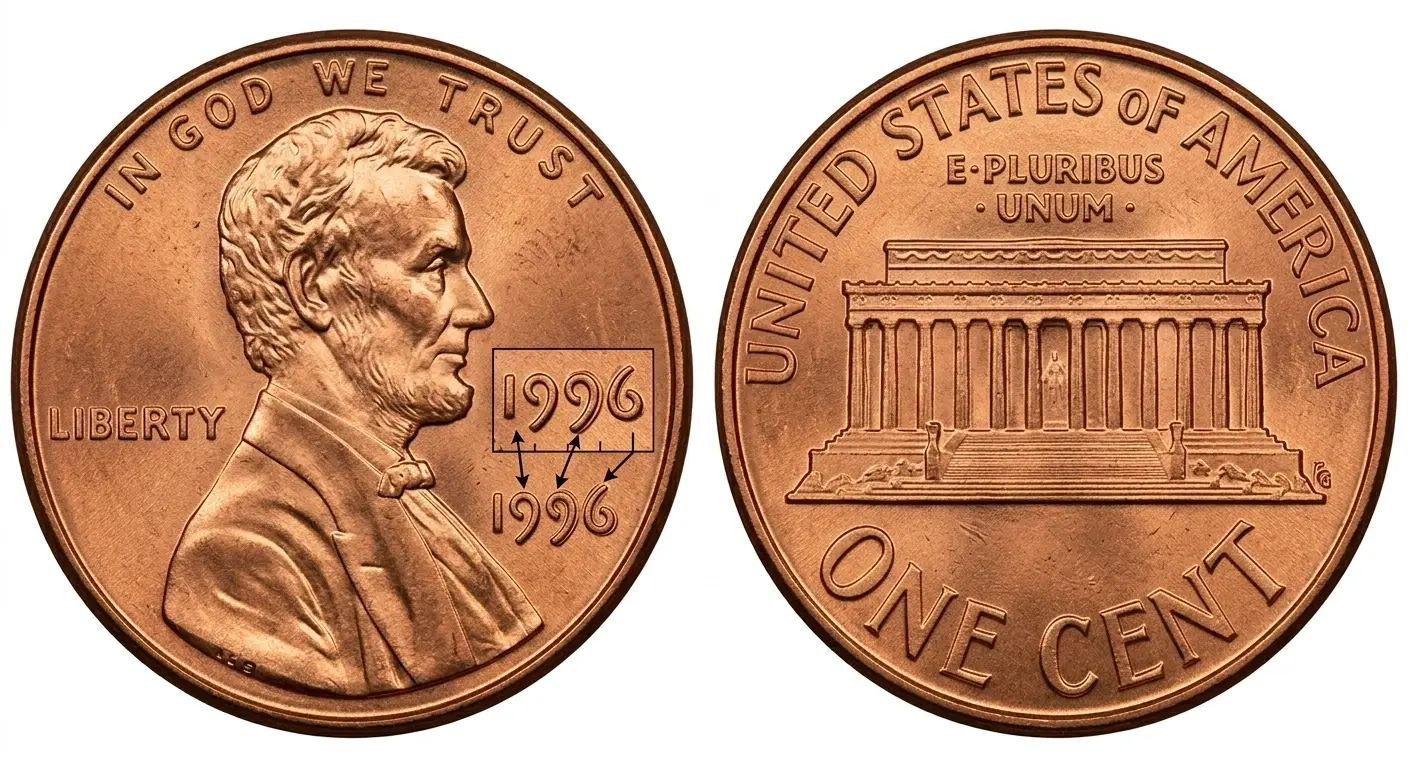
Market data from 2026 reveals a declining volume of unique error specimens available for purchase.
Limited supply creates significant interest among investors seeking portfolio diversification.
Identification of rare 1996 penny errors requires strict adherence to technical standards.
Objective cost metrics determine the significance of every manufacturing variance.
Avoiding subjective terminology ensures clarity during evaluation.
Parameter | Production Data |
Face Value | $0.01 |
Issue Date | 1996 |
Composition | Plated base alloy |
Mass | 2.5 grams |
Width | 19.05 millimeters |
Side Profile | Smooth |
Auction Trends and Financial Dynamics
Auction platforms document increased engagement regarding error coinage.
Stable growth patterns characterize the valuation of rare items.
Evidence-based findings rely on recent sale records.
Trends in price appreciation for production errors:
2024 pricing average: $10.50 per unit.
2025 pricing average: $12.20 per unit.
2026 pricing average: $14.50 per unit.
Annualized growth in error value sits at approximately 15 percent.
Price appreciation → Higher demand → Restricted market supply.
Manufacturing Defect Classification
Operational anomalies generate distinct physical characteristics.
Double Die
Stamp misalignment results in duplicated design elements.
Lettering and numerical digits show clear separation with the free coin value checker.
Microscopic inspection confirms secondary impact marks.
High valuations reflect the clarity of these duplicated contours.
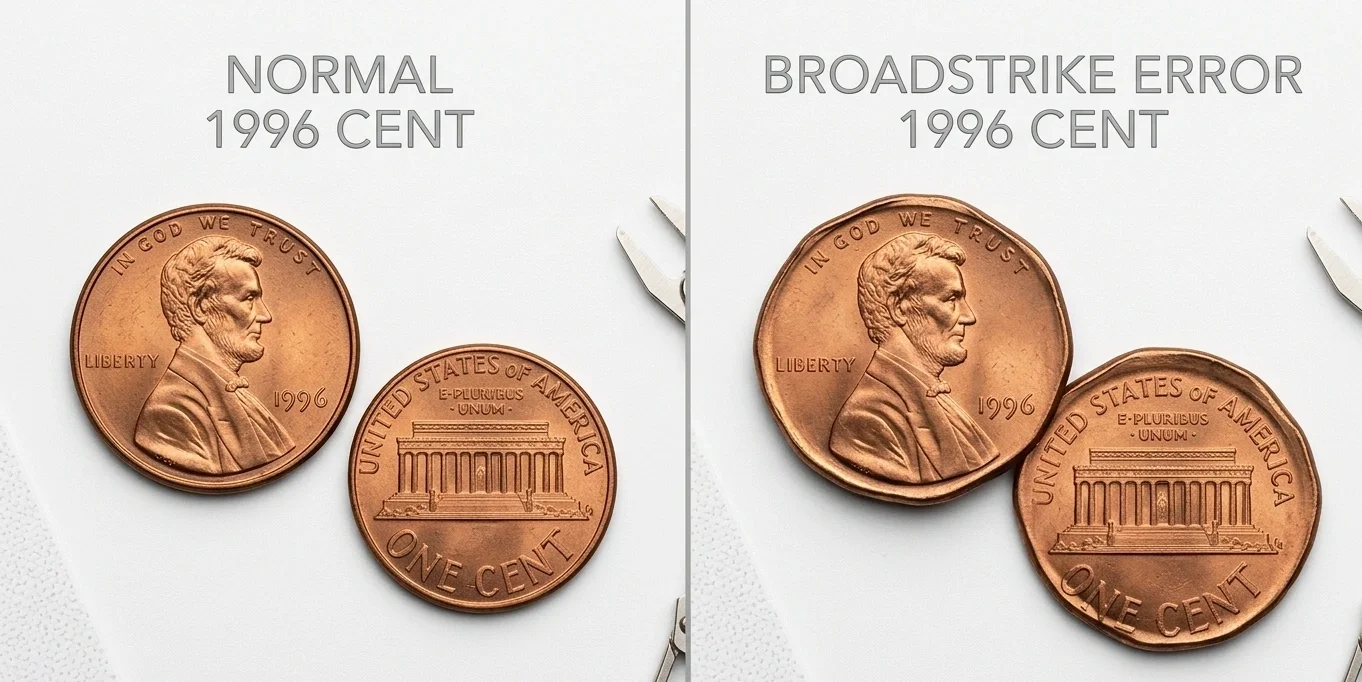
Off Centre
Irregular feeding of the metal blank into the press causes design shifts.
Missing portions of the image on the surface define this error category.
Offsets exceeding 50 percent increase the asset value substantially.
Auction prices for extreme offsets often exceed $100.
Die Crack
Fractured pressing equipment leaves raised lines across the surface.
Metal filling the equipment flaw creates a relief-like appearance.
Frequency of occurrence depends on the degradation state of production tools.
Grease Strike
Lubricant buildup prevents complete impression of design details.
Missing fine elements indicate this specific production failure.
Market assessments value this type lower than significant off-centre strikes.
Authentication and Evaluation Workflow
Systematic examination procedures ensure maximum accuracy.
Analysis steps involving physical verification:
Professional equipment usage reduces potential identification errors.
Absence of mechanical damage improves the overall coin worth.
Essential analytical tools:
Certification Impact on Liquidity
Third-party certification confirms authenticity and grade.
Expert assessment slabs improve asset liquidity significantly.
Investors favor certified items due to data reliability.
Statistics demonstrate direct correlation between certification and valuation:
High grades guarantee maximum price during secondary sales.
Strategic Accumulation Methods
Portfolio construction requires deep market understanding.
Removing damaged specimens preserves capital allocation.
Proper environmental control prevents coating degradation.
Storage protocols for long-term retention:
Proper storage → Surface protection → Asset value preservation.
Record Sales Performance
High-profile auctions indicate strong price ceilings for rarities.
Selected specimens achieve sales totals exceeding $500.
Final price depends on the rarity of the defect combination.
Value maximization drivers:
Economic Variables in Coin Markets
Inflationary pressures influence tangible assets.
Coin collecting functions as a portfolio diversification strategy.
High-quality error specimens exhibit resilience during market corrections.
Annual growth figures for rare variations:
Calculated annual growth remains steady at 15 percent.
Defect Type | Price 2024 $ | Price 2026 $ |
Double Die | $25.00 | $32.00 |
Off Centre | $50.00 | $65.00 |
Die Crack | $5.00 | $6.50 |
Grease Strike | $8.00 | $10.50 |
Counterfeit Detection Methods
Forgery attempts simulate errors through mechanical force.
Weight inspection highlights inconsistencies with production standards.
Microscopic surface analysis reveals signs of manual engraving.
Magnetic property tests confirm the metal core composition.
Edge irregularities indicate unauthorized post-production modifications.
Protection principles for investors: